






What Are Commodity Codes Used For?

There are many processes associated with the export and import of goods. These procedures are put into place so that goods can cross borders safely and legally. As part of the import-export activity, customer declarations must be completed. Requirements may differ from country to country; however, commodity codes are always required on custom declaration forms. […]
What are the Display Screen Equipment Regulations 1992?

Related Courses Display screen equipment (DSE) is equipment and devices with an alphanumeric or graphic display screen. This includes PCs, laptops, tablets and smartphones as well as less typical equipment such as microfiche readers. The legislation governing its use includes the Display Screen Equipment Regulations 1992 as well as the updated Display Screen Equipment Regulations […]
The Benefits and Dangers of Using Dual Screens

Related Courses The term dual screen means that there are two monitors connected to a single computer at the same time. The use of dual screens is increasing in prevalence across organisations in all sectors. However, certain types of workers (e.g. designers) reap more benefits than others. Increased productivity and ease of data comparison are […]
What Is A Code Of Conduct?

Our Code of Conduct Courses A code of conduct is a set of rules around behaviour for the employees to follow within an organisation. The code acts as a standard that staff need to meet so that they can know what is expected of them to produce a generally more efficient business. Often mixed up […]
The Control of Asbestos Regulations 2012

Asbestos is a highly dangerous, naturally occurring substance that has been used extensively in the construction industry for the past 150 years. Unfortunately, inhalation of asbestos fibres can lead to the development of lung cancer, mesothelioma (a rare but highly dangerous cancer of the lung lining), pleural disease and asbestosis. Management of asbestos containing materials […]
The Construction (Design and Management) Regulations 2015

The Construction (Design and Management) Regulations 2015 came into force on 6th April 2015, replacing the Construction (Design and Management) Regulations 2007. The legislation was introduced with the aim of protecting people from the risks of construction work through implementing systematic frameworks of risk management. Importantly, this legislation places responsibility on all those who are working […]
Is Asbestos Training a Legal Requirement?

Employers are legally required to provide asbestos training to workers. Regulation 10 of the Control of Asbestos Regulations 2012 states that “every employer must ensure that any employee employed by that employer is given adequate information, instruction and training”. This obligation is enforced by the Health and Safety Executive (HSE), which acts as the governing […]
Code of Confidentiality

Confidentiality refers to personal information that can’t be divulged to a third party without consent from the client. This sort of information is handled by financial institutions, hospitals, doctors, therapists, law firms, businesses, and religious authorities. This differs from privacy, which refers to the freedom from intrusion into someone’s personal information. While confidentiality is an […]
How Long Does an Asbestos Awareness Certificate Last?
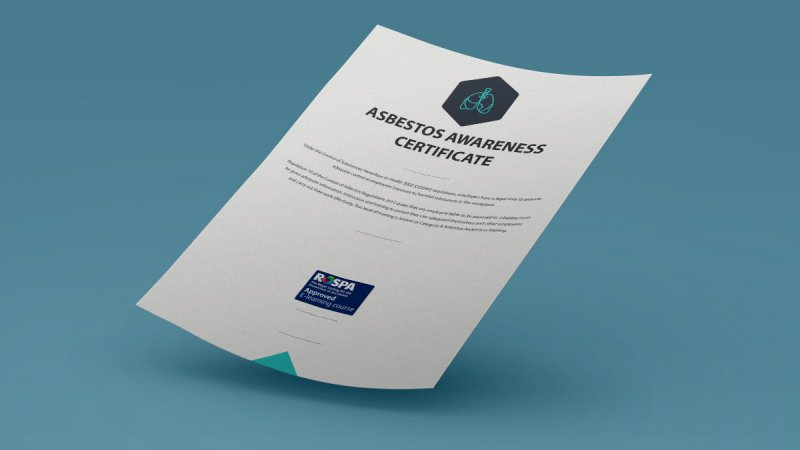
Related Courses In brief, how long an asbestos training certificate lasts varies greatly and depends upon the training provider. Asbestos is a naturally occurring, but highly dangerous, fibre that was used extensively in the construction industry before the turn of the millennium. Unfortunately, is has since been discovered that asbestos inhalation can cause lung cancer, […]