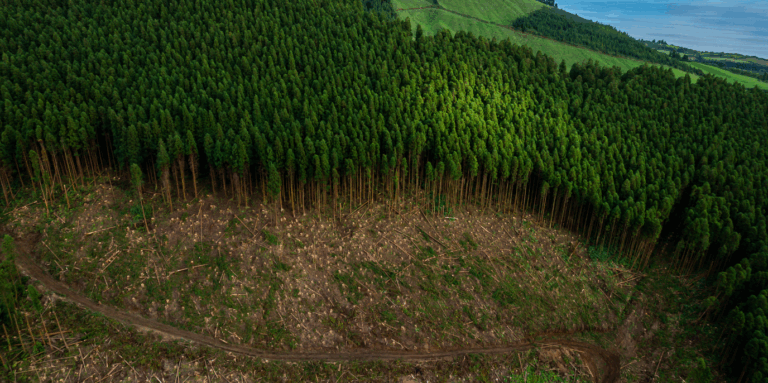











The UK government has launched a consultation on new mandatory supply chain due diligence regulations designed to tackle illegal deforestation. The proposals, published on 11 November 2026, represent a significant expansion of the previous government’s plans, bringing thousands more businesses within scope and moving Great Britain closer to the requirements of the EU Deforestation Regulation (EUDR).
The regulations will be introduced under Schedule 17 of the Environment Act 2021, alongside reforms to the existing UK Timber Regulation (UKTR). The consultation closes on 17 January 2027, with legislation expected during 2027 and implementation anticipated in 2028.
A substantially wider scope than previously proposed
Under the previous government’s proposals, announced in December 2023, mandatory deforestation due diligence would have applied to businesses with an annual global turnover exceeding £50 million. Businesses using 500 tonnes or less of each regulated commodity annually could also apply for an exemption.
The new proposals reduce the turnover threshold to just £1 million, with no volume-based exemption currently proposed. This would bring a substantial number of small and medium-sized businesses within scope for the first time.
The government is also expanding the range of regulated commodities. The original proposals covered cattle (excluding dairy), cocoa, palm oil and soy. The new regime would additionally cover coffee and rubber, alongside strengthened requirements for timber and wood products. Specified derived products, such as chocolate, furniture, leather goods and tyres, would also be covered. The precise scope will be determined by commodity classification codes, broadly aligned with those used under the EUDR. However this represents a significantly increased compliance burden.
What would businesses be required to do?
Businesses within scope would be required to establish and maintain a due diligence system to ensure that regulated commodities have been produced in accordance with relevant local laws. This would include collecting geolocation data identifying where commodities were grown, harvested or raised, assessing the risk of illegal deforestation and mitigating any identified risks to a negligible level before using the products commercially.
Businesses would also be required to report annually on their due diligence activities and share relevant sourcing information with other businesses in their supply chains. The government is considering lighter requirements for downstream businesses where due diligence has already been conducted upstream.
Potential enforcement measures include financial penalties, compliance notices and stop notices. The government is consulting on the maximum level of financial penalties, including whether these should be linked to corporate turnover.
How would the UK regulations differ from the EU Deforestation Regulation?
While the government intends to align many of the UK’s product classifications and information requirements with the EUDR, there are several important differences.
The most significant is that the proposed Great Britain regulations would initially target illegal deforestation only. The EUDR prohibits relevant commodities produced on land deforested after 31 December 2020, regardless of whether that deforestation was lawful in the country of production. The UK government has indicated that it intends to move towards a comparable deforestation-free standard in due course.
Unlike the EU, the UK is not currently proposing a country-level deforestation risk classification system, mandatory submission of due diligence statements before placing products on the market, or additional customs controls. The government’s preferred approach is to require businesses to share information directly throughout their supply chains, supported by retrospective annual reporting.
Northern Ireland faces earlier compliance deadlines
The EUDR will apply in Northern Ireland from 30 December 2026 for large and medium-sized operators. Micro and small operators will generally have until 30 June 2027, except for wood products already covered by the EU Timber Regulation, for which the earlier deadline applies.
This means businesses in Great Britain supplying regulated products to Northern Ireland or the EU may need to meet more stringent deforestation requirements well ahead of the introduction of the domestic regime in 2028.
Another expansion of mandatory UK supply chain due diligence
The consultation comes just days after the government announced separate proposals for mandatory human rights due diligence. While those proposals envisage a turnover threshold of £350 million, the proposed £1 million threshold for deforestation regulations demonstrates how far mandatory supply chain compliance could extend beyond large multinational businesses.
Businesses involved in food manufacturing, retail, hospitality, construction and other sectors using regulated commodities should begin reviewing their exposure, particularly their ability to obtain reliable sourcing information from suppliers. For many SMEs, the proposed regulations could represent their first experience of a statutory supply chain due diligence regime.