










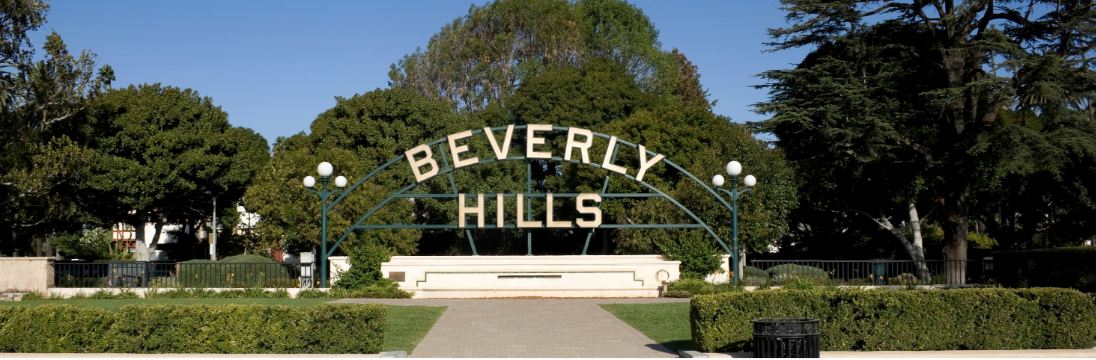
The US Department of Justice has filed a civil forfeiture complaint seeking to seize a Beverly Hills mansion allegedly purchased and renovated with around $30 million in proceeds from a scheme involving defence contracting, bribery, fraud and money laundering.
According to the DOJ, the mansion was allegedly bought and improved using proceeds from a scheme to defraud the US Department of Defense’s Defense Logistics Agency, pay bribes to an official in the Kurdistan Region of Iraq and violate US money laundering laws. The DOJ says the alleged conduct took place in connection with fuel deliveries to the US military during Operation Inherent Resolve, the campaign against Islamic State in Iraq and Syria.
The case is a striking reminder of how corruption risk can sit inside apparently operational supply chain arrangements. Fuel deliveries, airport access, subcontractors, government procurement, politically exposed persons and cross-border payments can quickly become part of a much larger financial crime picture.
What happened?
The DOJ filed the civil forfeiture complaint in the US District Court for the Central District of California on 22 April 2026. The complaint seeks forfeiture of a Beverly Hills property allegedly linked to General Mansour Barzani, described by the DOJ as a senior Peshmerga official.
The allegations centre on a Virginia-based defence contractor and others who, between 2016 and 2020, allegedly obtained more than $700 million from the Defense Logistics Agency for fuel deliveries to the US military. The fuel was delivered through Erbil International Airport in Iraqi Kurdistan, which the DOJ says was a critical delivery point for fuel used by the US military in Iraq and Syria.
The DOJ alleges that officers of the contractor agreed to pay General Barzani a bribe of $0.25 per litre in exchange for exclusive access to deliver jet fuel in Kurdistan for the US military and coalition forces. During the same period, competitors were allegedly blocked from accessing Erbil International Airport for jet fuel deliveries, while the Defense Logistics Agency issued one-time-buy contracts to the contractor, often at non-competitive and “greatly inflated” prices.
According to the DOJ, funds received from the Defense Logistics Agency were transferred to a trust established in Virginia for Barzani’s private benefit. Around $30 million was then allegedly transferred from that trust to purchase, renovate and improve the Beverly Hills mansion between 2018 and 2022.
The DOJ has made clear that the civil complaint is an allegation. The government still has the burden of establishing that the assets are subject to forfeiture by a preponderance of the evidence.
OCCRP connects the dots
OCCRP reported that the mansion is linked to Mansour Barzani, whose brother Masrour Barzani serves as prime minister of the semi-autonomous Kurdistan Region of Iraq. OCCRP also reported that the DOJ complaint did not directly name the company, referring to it as “Contractor 1”, but said contract numbers in the case identify the company as Virginia-based logistics company DGCI.
OCCRP also reported that a 2017 Kurdish government memo named DGCI, its Kurdish subcontractor Triple Arrow and another Kurdistan-based company as the only companies approved to deliver fuel to the airport. According to OCCRP, this exclusive access allegedly enabled DGCI to charge fees as high as $10 per gallon for jet fuel, compared with standard Defense Department jet fuel prices of $2.14 to $3.20 per gallon between 2016 and 2020.
OCCRP said it sought comment from the Kurdistan Regional Government’s permanent representative in Washington DC, Mansour Barzani and DGCI representatives, but had not received responses by the time of publication.
When procurement risk becomes financial crime risk
This case brings together several areas of risk that compliance teams often manage separately.
There is a bribery risk. The central allegation is that a contractor paid a foreign official for exclusive commercial access. That is the type of conduct anti-bribery controls are designed to detect, prevent and escalate.
There is a procurement risk. The alleged scheme involved government contracts, non-competitive awards and inflated prices. Procurement fraud can occur where access, urgency or operational pressure weakens oversight.
There is a third-party risk. The alleged arrangement involved a contractor, local access, a foreign official, a trust and property transactions. Each additional party or structure can create opacity unless due diligence is properly performed and kept under review.
There is a politically exposed person risk. Dealings connected to senior officials or their family members should trigger enhanced scrutiny. That includes understanding who ultimately benefits from commercial arrangements and whether intermediaries, trusts or connected companies are being used.
There is a money laundering risk. The DOJ’s complaint focuses on the movement of alleged proceeds through a trust and into high-value real estate. For businesses, the lesson is that financial crime risk does not end when a contract is signed or an invoice is paid. Suspicious flows of funds, unusual payment structures and opaque beneficial ownership should all raise concern.
There is also a sanctions and conflict-zone risk. The alleged conduct took place in the context of military operations in Iraq and Syria. Companies operating around conflict zones, defence supply chains or critical infrastructure face heightened exposure to bribery, diversion, sanctions, money laundering and terrorist financing risk.
Fuel, funds and red flags
Several red flags stand out from the allegations.
A contractor allegedly gained exclusive access to a strategically important delivery point. Competitors were allegedly blocked. Prices were allegedly inflated. Payments were allegedly linked to a senior official. Funds were allegedly moved through a trust. The ultimate benefit was allegedly a luxury property in the United States.
Any one of these factors would justify further review. Together, they suggest the kind of risk pattern that should trigger escalation.
Compliance teams should be alert to:
- exclusive access arrangements involving public officials or state-controlled infrastructure
- unusually high margins or prices, particularly in urgent or non-competitive procurement
- local agents, subcontractors or intermediaries whose role is not clearly documented
- payments connected to politically exposed persons or their family members
- trusts, shell companies or opaque structures receiving funds
- unexplained wealth, luxury assets or property purchases linked to contract proceeds
- restricted access, conflict zones or high-risk jurisdictions
- pressure to move quickly because of operational necessity or security concerns
The risk is not limited to defence contractors. Any organisation operating through agents, distributors, suppliers, logistics providers or local partners in high-risk jurisdictions can face similar exposure.
Due diligence that follows the money
Cases like this show why anti-bribery and anti-money laundering controls need to work together. A payment that looks like a commercial cost may also be a bribe. A procurement arrangement that looks like a local access issue may involve corruption. A third-party relationship that starts as an operational necessity may create serious legal and reputational risk.
Organisations should review whether their controls can identify and escalate these risks in practice.
That means checking whether due diligence goes beyond basic screening. It should establish who owns and controls third parties, whether they are connected to public officials, how they were selected, what services they provide and whether their compensation is proportionate.
It also means reviewing procurement processes. Where contracts are awarded on a sole-source or emergency basis, there should be clear justification, independent review and evidence that pricing is reasonable.
Payment controls should also be tested. Payments to intermediaries, trusts, offshore structures or unfamiliar accounts should not pass through unchecked. Finance teams need to know what red flags look like and when to escalate.
For high-risk jurisdictions, businesses should consider enhanced due diligence, ongoing monitoring and senior-level approval for relationships involving public officials, government contracts, critical infrastructure or security-sensitive operations.
Training is also essential. Staff in procurement, finance, sales, logistics and leadership roles need to understand how bribery, fraud, money laundering and sanctions risks can overlap. They also need practical examples that show how corruption can be hidden inside ordinary commercial arrangements.
The mansion is only the endpoint
The DOJ’s Beverly Hills mansion case is about more than one property or one alleged bribery scheme. It shows how corruption can move through a supply chain, distort public procurement, exclude competitors and ultimately appear as legitimate wealth.
For compliance teams, the message is clear. Financial crime controls need to be connected. Anti-bribery, fraud prevention, AML, sanctions, procurement and third-party due diligence cannot sit in separate silos. The risks are too interconnected.
When a business is operating in a high-risk market, dealing with public officials or relying on local access to win or perform contracts, the question should always be: who benefits, how are they being paid, and can we evidence that the arrangement is legitimate?
That evidence may be the difference between a defensible business relationship and a serious enforcement problem.
Financial and corporate crime training help your teams understand how bribery, fraud, AML, sanctions and related risks connect, and how to spot the warning signs before they become enforcement issues. Try it now.