










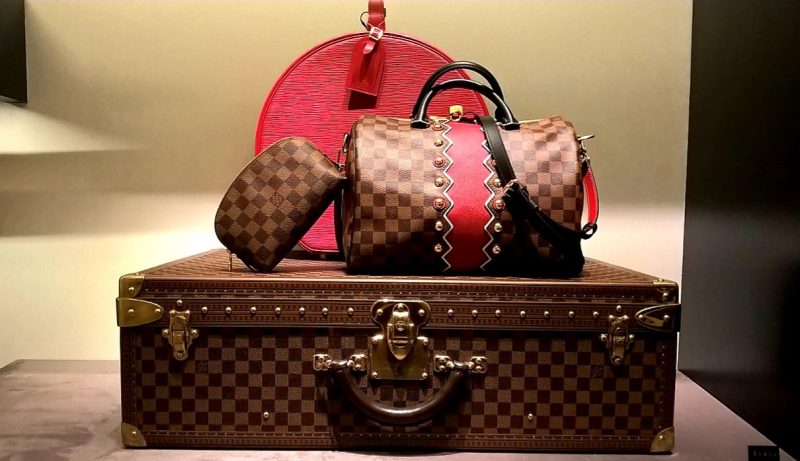
Luxury goods have long been attractive to money launderers. They are expensive, portable, easy to resell, and often traded in markets where discretion is part of the customer experience. A Birken bag, Rolex watch, De Beers diamond, a Picasso artwork or a classic car can become a compact store of value, converting criminal cash into an asset that can be moved, exported, resold or used to project legitimate wealth.
That risk was brought sharply into focus by the Dutch enforcement action against Louis Vuitton’s Netherlands business. The Dutch branch of the French luxury house has agreed to pay a €500,000 fine after prosecutors found serious failures in its anti-money laundering controls. AML is a compliance obligation for many luxury retailers, high-value dealers and art market participants. Where firms fail to challenge unusual behaviour, verify customers or report suspicious transactions, they can become part of the laundering process.
Louis Vuitton Netherlands fined over money laundering failings
In February 2026, Dutch prosecutors announced that Louis Vuitton’s Dutch arm had agreed to pay a €500,000 out-of-court settlement linked to alleged breaches of the Dutch Money Laundering and Terrorist Financing Prevention Act. The enforcement action arose from a wider investigation into a suspected money laundering network in which criminal proceeds were allegedly used to buy luxury goods, especially handbags, which were then shipped to China and resold.
The central suspect is reported to be a 36-year-old woman from Lelystad, who prosecutors believe spent more than €2 million in criminal proceeds between August 2021 and February 2023. According to reports, she bought luxury goods at Louis Vuitton stores using cash, sometimes under different names, before exporting the handbags to China in removal boxes for resale. Investigators reportedly found boxes, receipts, CCTV footage and chat messages connected to the suspected scheme.
The prosecution case is significant because the alleged laundering did not depend on a bank, crypto exchange or offshore structure. It used a prestigious retail brand. The suspected mechanism was straightforward: criminal funds were converted into high-value goods, the goods were moved across borders, and the resale proceeds could then be presented as the product of legitimate trade. A money laundering scheme as classic as a Louis Vuitton handbag.
What Louis Vuitton allegedly failed to do
The issue for prosecutors was not simply that a criminal suspect bought expensive goods. It was that the company allegedly failed to respond properly to clear risk indicators and an armada of red flags. Dutch prosecutors said Louis Vuitton failed to do enough to prevent money laundering by customers and did not properly identify customers who repeatedly spent large sums of cash.
Several warning signs were present. The suspect allegedly used different names, made repeated high-value purchases, and was not sufficiently challenged. A former Louis Vuitton sales assistant is also under investigation, suspected of assisting the purchaser by alerting her when expensive bags were available and warning her if her spending risked triggering internal or legal reporting requirements.
This is a classic AML failure pattern. A customer does not need to exceed a single reporting threshold for suspicion to arise. A firm must look at the behaviour as a whole. Repeated cash purchases, use of multiple names, apparent structuring, resale activity, third-party assistance and possible insider collusion all point towards a higher-risk transaction profile.
Until 1 January 2026, Dutch businesses were required to report unusual transactions including cash payments of €10,000 or more. The threshold has since been lowered to €3,000. In the earlier phase of the investigation, prosecutors reportedly focused on transactions kept just below the €10,000 reporting threshold, a technique commonly known as structuring.
Why luxury goods are vulnerable to money laundering
Luxury goods are attractive to criminals because they combine high value with portability and resale potential. A relatively small number of handbags, watches, jewellery items or artworks can hold substantial value. They can be transported across borders, sold through formal or informal resale channels, or used as collateral. In the Louis Vuitton case, prosecutors allege that handbags were shipped to China and resold through a form of cross-border personal shopping or resale trade known as Daigou.
Transparency International has long warned that luxury investments such as real estate, sports cars, yachts, jet planes, precious metals and jewellery are used by corrupt individuals to hide illicit funds. These purchases can allow dirty money to enter the legal market by converting it into apparently clean assets, making it harder for authorities to detect, freeze and recover the funds.
Meanwhile, suspicious activity reporting from real estate agents and dealers in high-value items has historically been extremely low compared with the scale of transactions taking place in those sectors. Non-financial businesses are often the point at which criminal wealth is integrated into the legitimate economy.
Jewellery, precious metals and stones present another risk. Their value-to-weight ratio makes them especially attractive for cross-border movement and trade-based money laundering. Diamonds, gold and high-end jewellery can carry substantial value in a small physical form, creating obvious challenges for customs, law enforcement and private-sector compliance teams.
The art market has also faced sustained scrutiny. Artworks can be high in value, subjective in price, portable and traded through intermediaries, offshore companies or private sales. HMRC requires art market participants in the UK to register for money laundering supervision where they fall within the regulations, and the regime applies to transactions or linked transactions of €10,000 or more.
Counterfeit luxury goods add another layer. Underground luxury markets and counterfeit authentic luxury goods can be used in fraud and laundering ecosystems, including schemes involving cryptocurrency, stolen payment credentials and resale markets. The compliance risk is therefore broader than boutiques accepting cash. It includes online resale, brand impersonation, payment fraud, counterfeit channels and the movement of goods bought with illicit funds.
Luxury markets tend to have cultural vulnerabilities. Discretion, privacy, use of intermediaries, cross-border customers and a reluctance to offend high-spending clients can all weaken compliance controls. Those features may be normal in the sector, yet they can also make it easier for criminals to hide behind wealth, status and customer service expectations.
The compliance challenge for luxury brands
The luxury sector faces a difficult balancing act. Brands are built on exclusivity, service and discretion, while AML compliance requires challenge, verification and sometimes refusal. That tension cannot be resolved by ignoring suspicious activity. Regulators expect luxury businesses to understand their role as gatekeepers, particularly where their products can be used to move value across borders.
A credible AML programme for luxury goods should include a documented risk assessment, clear customer due diligence procedures, enhanced due diligence triggers, transaction monitoring, sanctions and PEP screening, source-of-funds checks where appropriate, staff training, suspicious activity reporting procedures, record-keeping, internal escalation routes, and senior management oversight. For international brands, controls must also work across stores, subsidiaries, online channels and resale-related activity.
The Dutch Louis Vuitton fine shows that reputational prestige does not reduce AML exposure. In some cases, it increases it. Criminals are attracted to brands whose goods hold value, command demand in secondary markets and can be resold internationally. Luxury businesses therefore need to treat their products as potential value-transfer instruments, not just consumer goods.